Written by Sam Clark
Certificate: 15
Running time: 99 minutes
Director: Harris Dickinson
Kitchen sink dramas are a staple of British cinema, and the darker they tend to be, the more thought provoking and powerful. Whilst I am a fan of most, I tend to get rather disengaged and disconnected with those that take a more surreal and dreamlike approach to their storytelling. Urchin relishes in the usual aesthetics of the genre, with our central character falling down a rabbit hole of addiction, but I confess there were times in which my patience was starting to dwindle as the film took more of a hallucinogenic and dreamlike approach. I do believe the film as a whole is a bold and fierce debut piece, but the question of just how much it will work for audiences still plagues me after seeing it.
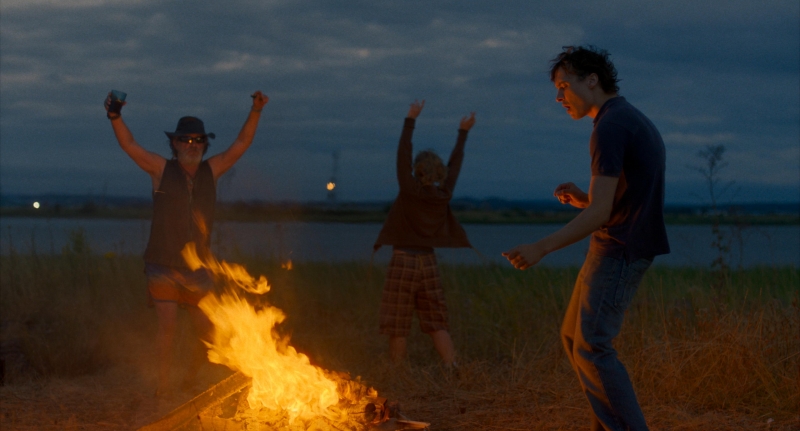
Harris Dickinson (who starred in Triangle of Sadness, Babygirl) is one of my favourite actors currently going, and makes his debut behind the camera here and also writes. Urchin tells the story of Mike (Frank Dillane) who is homeless and living on the streets of London. He has spent many years surviving by means of begging and stealing watchers from wealthy members of the public, and navigating and making his way around London's underbelly. One day, Nathan (Harris Dickinson in cameo form), his so called friend, steals his wallet. When a passerby offers to help him and him food, Mike impulsively assaults him, and steals his watch and wallet - after which he is caught and arrested. Upon his release, he is seven months sober and begins to attempt to rebuild what's left of his life. Mike finds shelter and residence in a hostel, receives help from social services, and is able to find a job working as a cook in a hotel. After he is sacked for incompetence, he is reduced to picking up litter. Whilst trying to turn his life around, he is also required to attend counselling sessions with his victim who he robbed, forcing him to come to terms and confront the burden of what he has done. Mike's grasp on reality loosens more and more, and it becomes a question of whether he can lift himself from the hole he is in or remain there forever.
The preview screening that I attended for Urchin was Cineworld's ''Secret Screening'', in which you purchase a ticket but you do not know what for, hence the title which is part of the fun. On some occasions, you are treated to the biggest release or blockbuster of the week, and on others a title that is not set to come out for another couple of weeks (which again could be a blockbuster). But the other side of that is that it could be a film selected that is not only a very small release, but perhaps one you do not have any interest in seeing at all - or one that is simply supposed to be terribly which has happened before. Hence why walking out is a rather common occurrence at one of these and something I have seen in the past (the only time in which exiting a cinema is somewhat expected). Sadly, that is just what happened here. This was the most amount of walk outs I have seen, and whilst I thought Urchin was a brooding British drama that took absolutely no prisoners; I do understand how and why it did not work for others.
Not only is most of the film is tricky to align with, due to the upsetting and depressing subject matter, quite a lot of it is shot from a distance and surprisingly difficult to hear. Since this is Harris Dickinson's debut feature, I would've like to see more of a artistic stamp, as opposed to a paparazzi style finish, but if that's his way then so be it. So what we have here is not only a bleak story but it is told from a rather bleak perspective, almost forcing to you sit forward in your seat and angle your ears towards the screen. I do actually recall a gentlemen to the left of me leaning forward ever so slightly.
Frank Dillane is superb here as Dickinson excellently captures his descent with large portions of the film just following him around, forcing us to watch him fall further into the abyss. Despite being unsure about his approach this time, I do look forward to seeing what he can do from behind the camera next. The more time went on with Urchin, the more seats around me emptied. On a psychological level, there is nothing worse to see, but this thankfully not not effect my judgement all that much, but did reflect just how little it was working for others. This question now remains: can films such as British sink dramas, or indeed any film that completely goes against the norm and instead gives us something laid back and contemplative, survive multiplexes anymore? Or are they simply destined to just belong at independent venues where they are more welcome? Only time will tell.
Urchin is in cinema Friday 10th October