































It comes after the launch of the Government’s new Road Safety Strategy which was unveiled earlier this year.
The strategy is built around an ambition to reduce deaths and serious injuries on UK roads by 65% by 2035 – and 70% for children under 16 – through a series of new safety measures.
It sets out a range of policies to support this aim, focusing on four key themes:
- Supporting road users
- Taking advantage of technology, innovation and data for safer vehicles and post-collision care
- Ensuring infrastructure is safe
- Robust enforcement to protect all road users
In launching the strategy, the Government is also consulting on proposals including:
- Lowering the drink-drive limit, including a lower limit for novice drivers
- Introducing a minimum learning period for new drivers
- Mandatory eyesight testing for those over 70
It also plans to explore the use of preventative tools, such as alcohol interlock devices for convicted drink drivers, immediate licence suspensions for suspected drink or drug driving and a new Road Safety Investigation Branch to analyse crash patterns, drawing on police and healthcare data to inform prevention strategies.
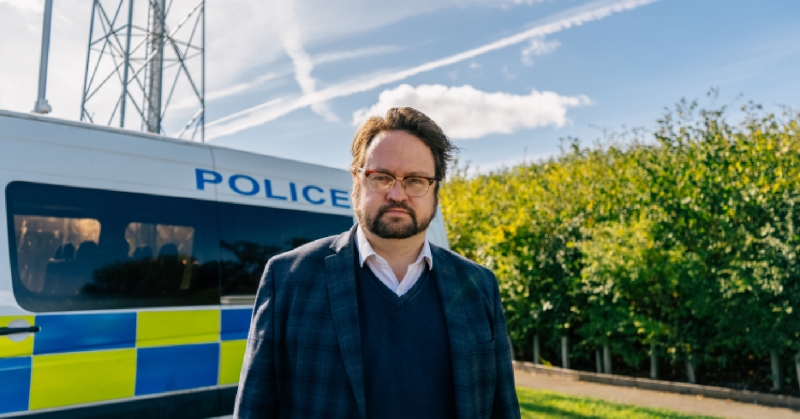
Matt fed into the national consultation and provided a response to the potential overhaul of driving laws:
On drink-drive limit
Matt said: “I strongly support reducing the legal drink-drive limit to align England and Wales with Scotland as well as introducing a zero-tolerance approach for new drivers.
“The evidence is clear that even ‘just one’ alcoholic drink can impair judgement and reaction times, particularly for those with less experience behind the wheel. A lower limit would make people reconsider drinking before getting into a car to drive.
“Any level of drink driving is unacceptable and reducing the limit would be a vital step towards preventing avoidable deaths and serious injuries and making our roads safer for everyone.”
“I also stand firm on penalties given for drink and drug driving not being altered. Driving a vehicle under the influence of alcohol is a choice made by the driver. Not only putting themselves at risk, but also other road users. Reducing the penalty only dilutes the severity of the offence.
“I strongly believe that current minimum disqualification periods aren’t appropriate, and the deterrent isn’t good enough. A higher penalty would make drivers think twice before breaking the law again.
“Novice drivers are also still learning, therefore a zero drink-drive limit for all new drivers would, in my opinion, be appropriate. It would reduce the potential peer pressure to have ‘just one’”.
On minimum learning period for new drivers
Matt said: “I support a minimum time period of six months for people learning to drive with at least 30 hours instruction, either through a qualified instructor or friends and family.
“I think this would provide all learner drivers with more time to develop their skills before they take their practical driving test. It would also give them an opportunity to gain more supervised driving experience in varied conditions, such as at night, in heavy traffic and different weather conditions.”
On mandatory eye tests for over 70s
Matt said: “The introduction of eyesight and general health tests for older motorists is a vital step in protecting road users. Health deterioration is an inevitable part of ageing and can have a huge impact on driving ability and consequently the safety of all road users.
“Drivers must be honest with themselves about their ability to drive safely and take proactive steps to remain road-worthy, including regular eye tests and medical check-ups. Driving is a responsibility that must be continually reassessed – not a lifelong entitlement.”
Further views from the PCC
Matt also expressed his support for Graduated Driver Licensing (GDL) which would put a set of restrictions on new drivers for an initial period of time, including:
- A limit on how many passengers new drivers can carry
- Driving curfews – restricting new drivers from roads during certain times, most likely late at night
- Engine sizes – limits on driving powerful vehicles
He said: “It’s disappointing that such a policy isn’t included in the Road Safety Strategy. It feels like a missed opportunity to go further in ensuring we ease new drivers in, building confidence and skills gradually and reducing the risk of mistakes early on.”
Matt added: “I also support mandatory retesting for people over 75 and I would have liked the consultation to look at options for retesting older people to ensure they are road safe.”
Local and national picture
Between April 2025 and March 2026, 616 people were injured on roads in Cleveland.
Contributing factors included speeding (18%), drink or drug driving (14%), distraction (6%) and failure to wear a seatbelt (2%).
In the same period, speeding was the most prominent cause of collisions amongst 25–35 year olds (30%) compared to 17-24 year olds (22%), while younger drivers were more likely to be involved in drink or drug-related incidents (17%).
Nationally, there have been 127,161 casualties on UK roads, including 1,579 fatalities.